Bow and stern thrusters
At low speed the rudder has little effect, and the wind quickly pushes the bow aside. A bow thruster sits in a tunnel through the bow and pushes the bow to port or starboard, whatever the boat’s speed. Paired with a stern thruster, it moves the whole boat sideways, which is a significant advantage on larger boats and in strong wind.
Tunnel or retractable
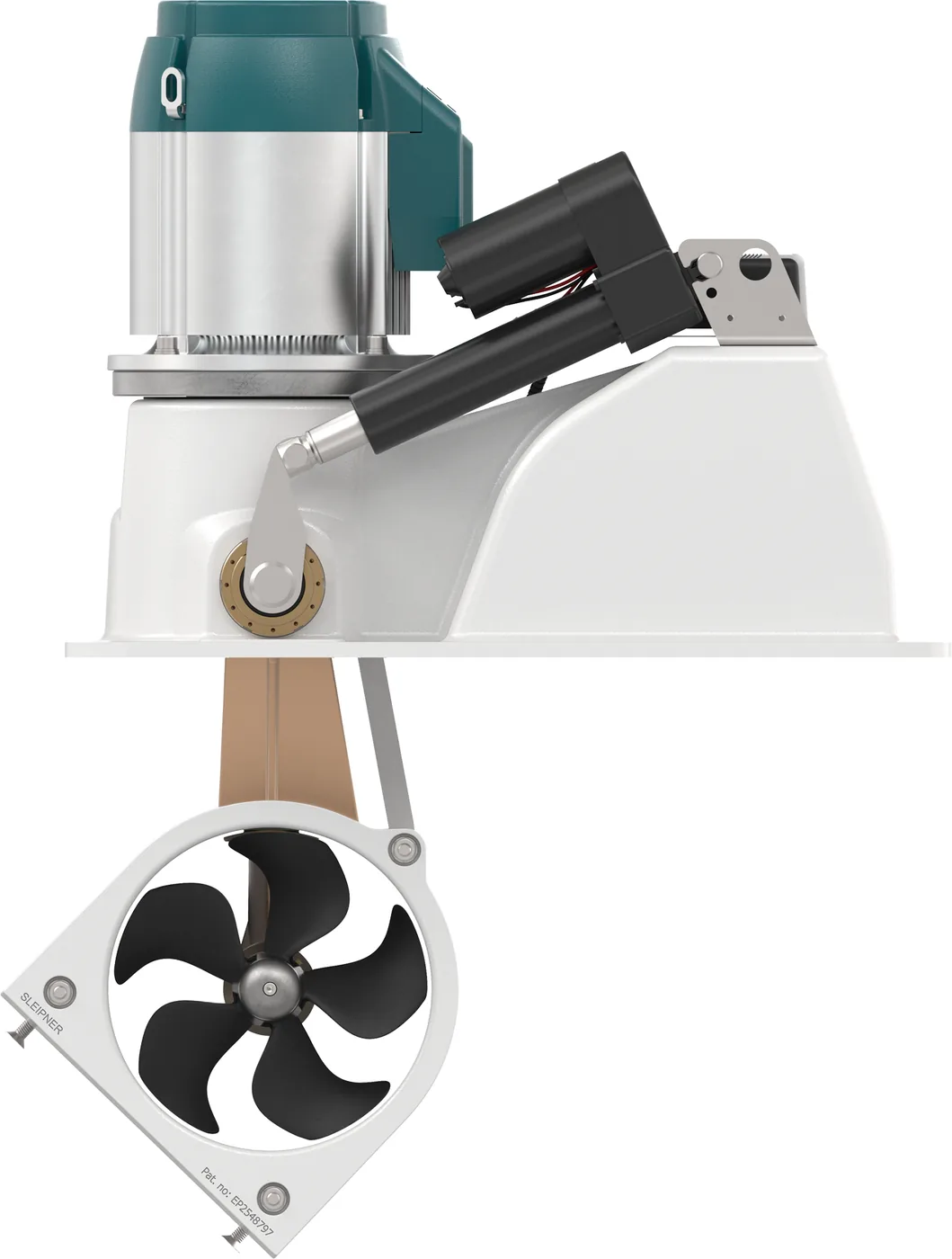
The tunnel thruster is the most common type. Where a tunnel cannot be fitted, or would add drag at speed, as on sailing yachts and fast motor boats, a retractable thruster drops out of the hull only while you use it.
One example is the 48 V Sleipner ERV130: when you do not need it, it stays retracted in the hull and adds no drag under way. For a tunnel thruster, we place the tunnel as deep below the waterline as practical, so the propeller has enough water even in waves.
Electric or hydraulic thruster
Most thrusters on leisure boats are electric and run from the batteries. Because they draw a lot of current, they are meant for short, repeated bursts during a manoeuvre. On larger yachts, where the thruster runs longer and more often, a hydraulic version driven by the boat’s hydraulic system is common. Some models let you apply thrust gradually, which is especially valuable in a tight berth.
How we size it
We size the thruster to the boat’s length, weight and windage, and to the conditions you will berth in. With electric thrusters the power supply matters just as much: cable size, battery and charging, so the thruster delivers full power when you need it.
We are the official Sleipner distributor for Slovenia. We choose the thruster, install it, connect it to the boat’s power and service it.
Thruster control and maintenance
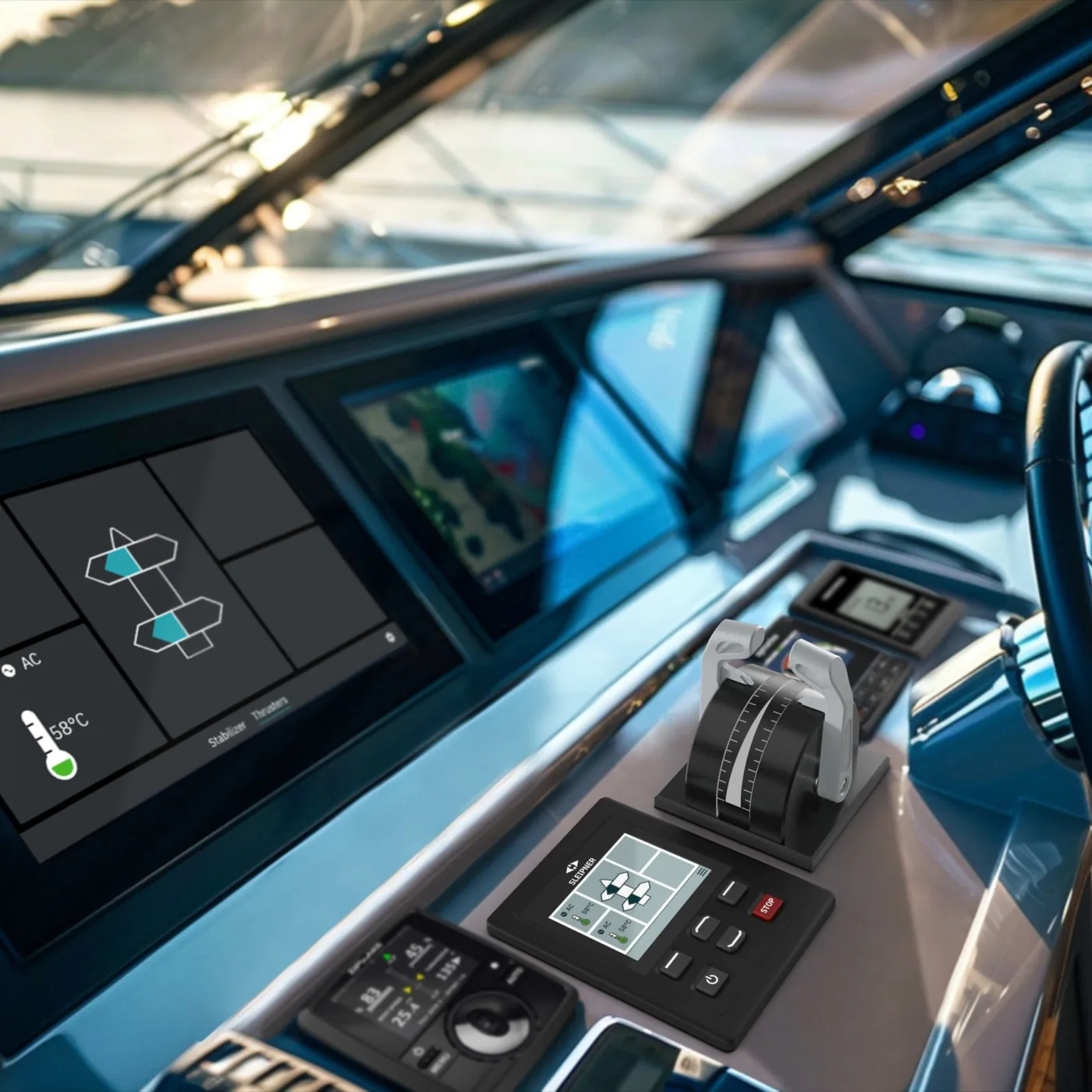
Sleipner also offers the S-Link control with twin levers and a colour touch screen. We fit the control next to the throttle, because during a manoeuvre you use both at once. If you would rather berth from the deck than from the helm, read Wireless boat control: berthing from the deck, not the helm, and for a calmer boat at anchor, Stabilisers for boats: less roll under way and at anchor.
The thruster is always in the water, so we check the propeller and the zinc anode every time the boat is lifted out. We also supply spare parts for Sleipner thrusters.
Frequently asked questions
Can a thruster be retrofitted to an existing boat?
In most cases, yes. We inspect the bow, the space inside and the electrical system, then propose a tunnel or retractable unit.
Do I need a separate battery for the thruster?
Electric thrusters draw a lot of current for short bursts, so they often get their own battery near the thruster. We match the solution to your power system.
How do I control the thruster?
With a panel or joystick at the helm and, if you wish, a wireless remote.