How to choose an anchor: type and weight
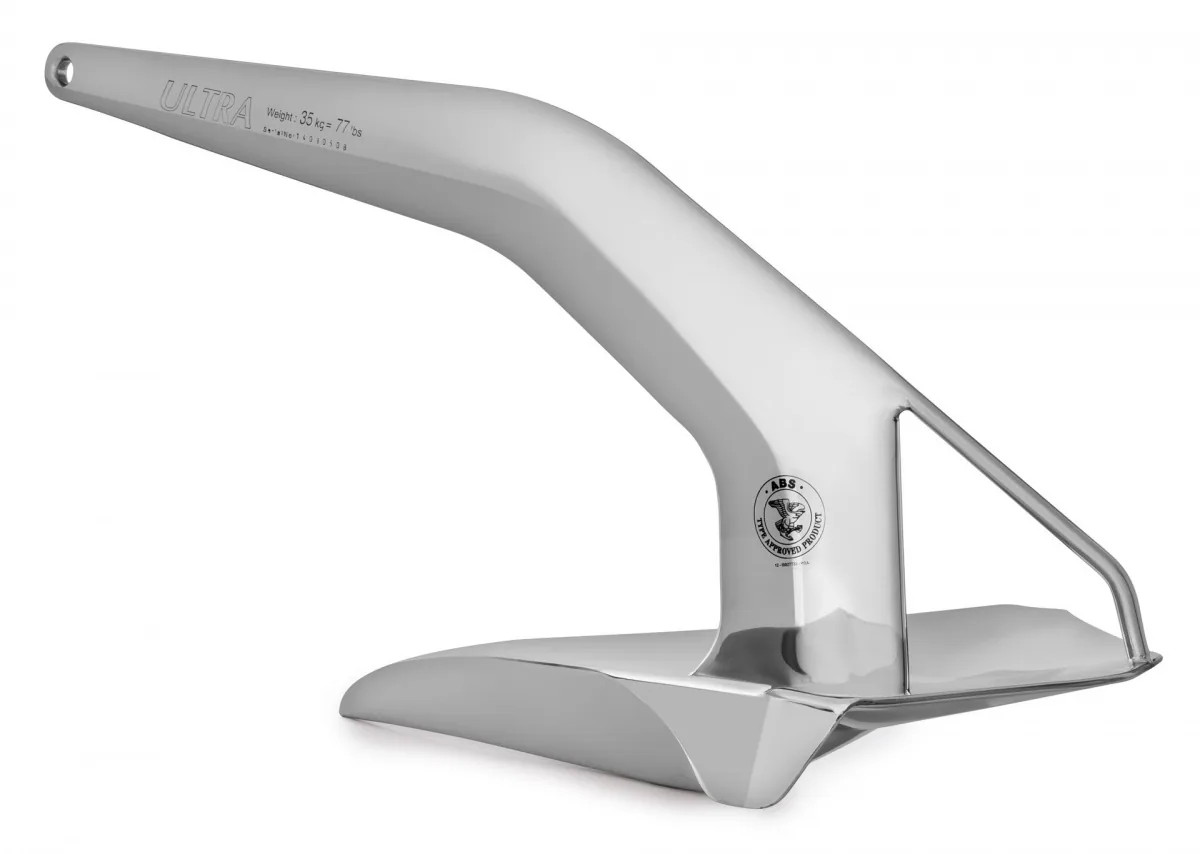
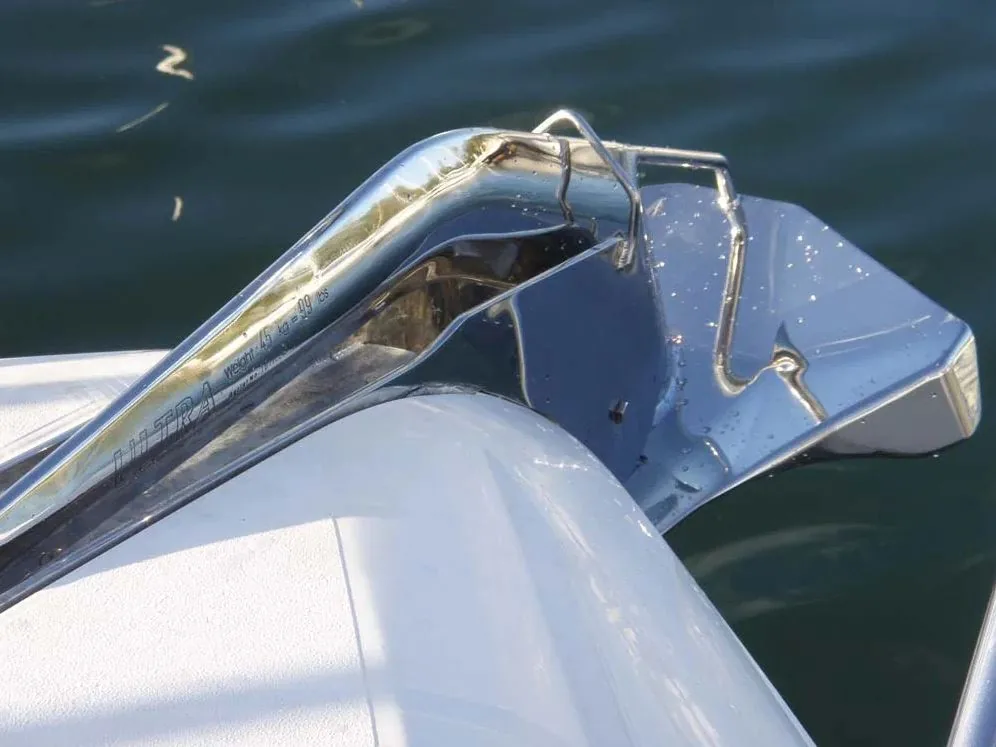
Anchors differ in shape and in how they dig into the seabed. Older designs such as the plough and the claw are still common. Newer anchors are designed to turn into position faster and set even in difficult bottoms such as weed or hard sand.
We size the anchor to the boat’s length, weight and windage, not length alone. Manufacturers publish tables, but if you are on the borderline it is better to go up a size. It also matters that the anchor stows properly on the bow roller and that the windlass can lift it.
Chain or rope
Chain is heavy, so it lies along the seabed and pulls the anchor horizontally, which helps it hold. It does not chafe through on rocks. Rope is lighter and stretches, which absorbs shock loads, but it can be damaged on a sharp bottom. That is why smaller boats and sailing yachts often use a mix: a few metres of chain at the anchor, then rope. Motor boats with a windlass usually carry all-chain.
Once you are anchored, take the load off the chain with an elastic snubber line and a chain hook, so shock loads from the waves do not go straight onto the windlass.
Swivel and windlass
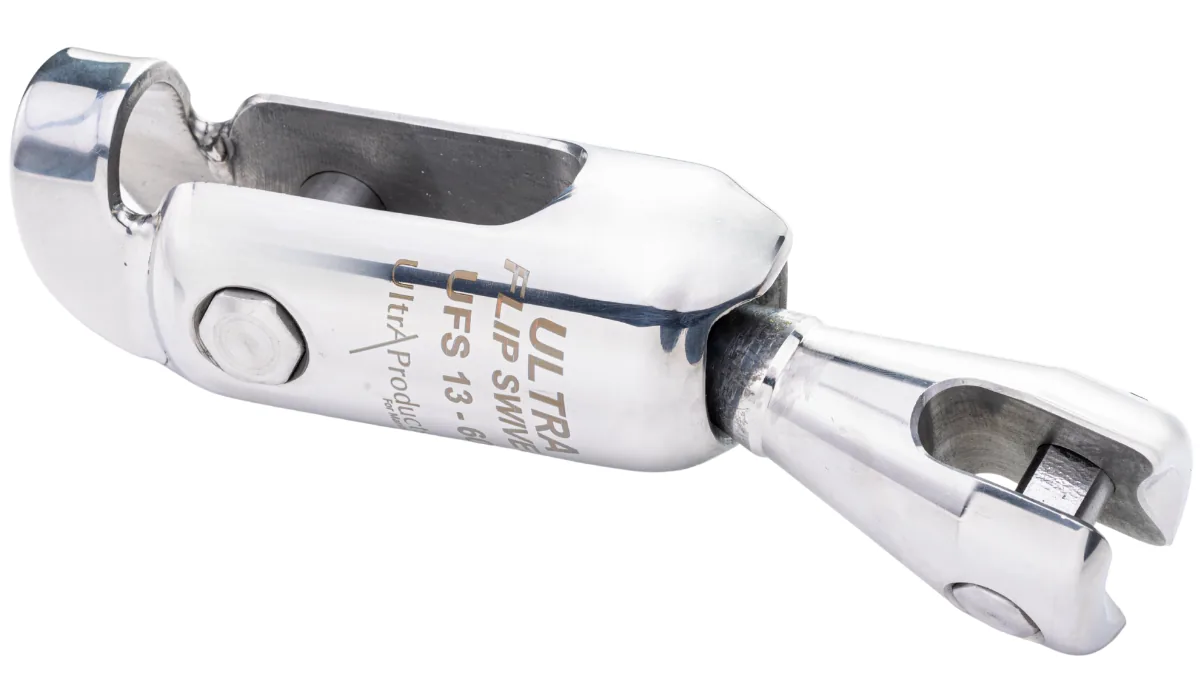
A swivel between the chain and the anchor stops the chain twisting and helps the anchor arrive on the roller the right way up. The Ultra Flip Swivel is designed to turn the anchor into the correct position as it comes up. The swivel must be at least as strong as the chain, or it becomes the weakest link.
We choose the windlass for the combined weight of anchor and chain and for the chain size, which the gypsy, the wheel that grips the chain, must match. You can work the windlass from the helm, at the bow or wirelessly, and a Shipcontroller chain counter shows how much chain is out.
How much chain to let out
The ratio between the length of chain let out and the depth, the scope, matters as much as the anchor itself for safe anchoring. A common rule is at least three times the depth with chain, and a good deal more in strong wind or with rope. Add the height of the bow above the water, and leave enough room for the boat to swing round the anchor without getting close to the shore or neighbours.
Why we trust Ultra anchors is explained in Ultra anchors: choosing the right anchor for your boat. When choosing, we look at your boat, bow roller, windlass and chain, propose a matched set and fit it. All the anchoring gear is on the Deck and safety page; for advice, write to us or call.
Frequently asked questions
How heavy an anchor do I need?
It depends on the boat’s length, weight and windage, and on the seabed you anchor in. We start from the manufacturer’s tables and your experience, and when in doubt we go a size up.
Will a new anchor fit my bow roller?
Not necessarily. Before you buy we check the shape and size of the roller and, if needed, propose a solution.
How often should I check the chain?
At least once a season, check the chain, the shackles and the swivel. When links are worn, or the coating has gone and the chain is rusting, it is time to replace it.