What the ABYC C-7 standard is
ABYC (the American Boat and Yacht Council) is the American body that writes technical standards for building and equipping boats. With standard C-7 it has introduced new criteria for battery disconnect switches, which until now were assessed under UL 1107.
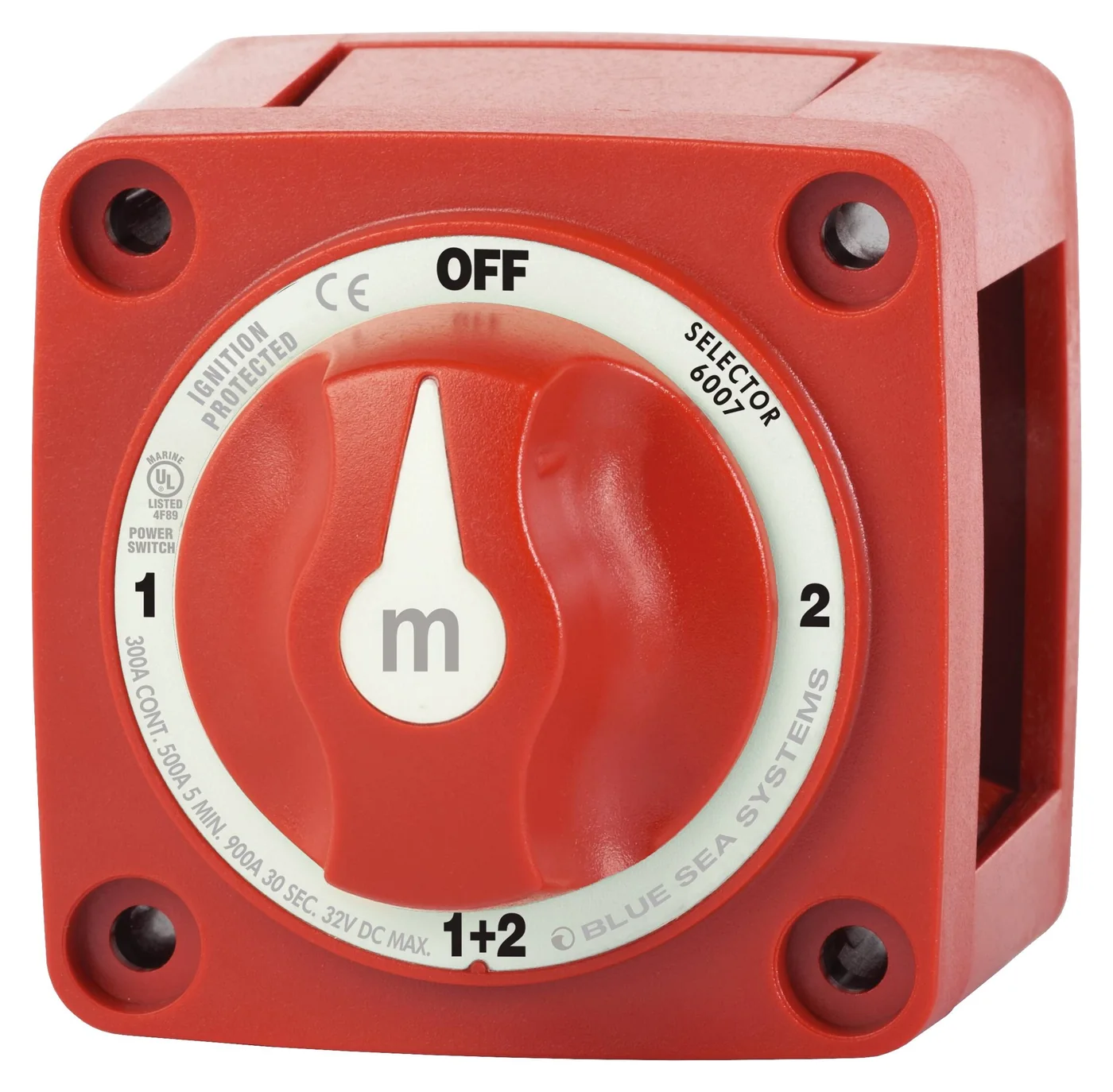
In April 2025 Blue Sea Systems announced that all its battery switches and relays with switches were moving to C-7, and its website states that its switches already meet the new standard. According to the manufacturer, ABYC set July 2025 as the deadline for the transition. Older products marked UL 1107 will stay in circulation for a while and be phased out gradually.
What changes with ABYC C-7
- Stricter electrical and mechanical test criteria that better reflect conditions on board.
- Tests that replicate vibration, extreme temperatures and moisture, the factors that most affect how long a switch lasts.
- Alignment with other modern boat-building regulations, which makes compliance simpler for boatbuilders.
- Some switches carry lower electrical ratings, even though the switch itself has not changed.
Why a switch’s current rating may look lower
A battery switch is marked with the current it can carry continuously and for a short time, for example 300 A continuous and 500 A for five minutes. Because C-7 testing is harsher and closer to real use, the figures on new labels may be lower than those under UL 1107.
Blue Sea Systems stresses that its products and their performance have not changed; the new rating is simply more accurate and more conservative. So if you replace an old switch with the same model under a new label, the lower figure does not mean a weaker switch. When choosing a switch, though, the actual current in the circuit should decide, not just a comparison with the figure on the old one.
What it means for boat owners
For Blue Sea Systems switches, the manufacturer says installation, maintenance, warranty and service terms stay the same. Labels and documentation are being updated, and you can check C-7 compliance in the product documentation. For switches from other makers it is worth checking compliance separately.
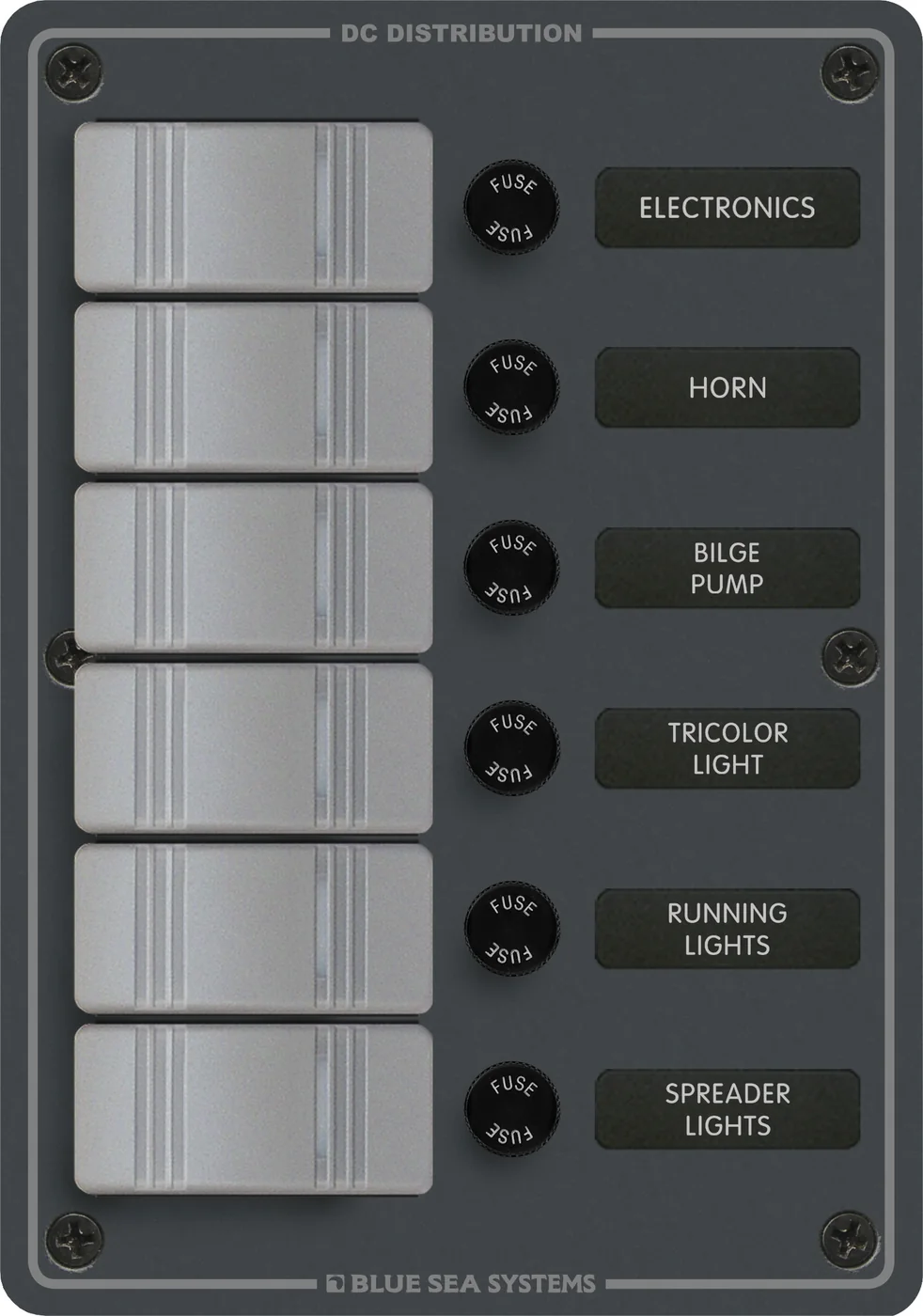
The battery switch is one part of the whole power distribution on board, together with fuses, bus bars and the switch panel. So whenever we replace a switch we also look at the cables, terminals and circuit protection.
We supply and install Blue Sea Systems switches, panels, fuses and bus bars. All the equipment for the power system is on the Power page, and protection for lithium-ion batteries is covered in Lithium-ion batteries: a safety relay and a class T fuse. Write to us or call for an inspection or a proposal.
Frequently asked questions
Do I have to replace my existing battery switch because of ABYC C-7?
Not necessarily. Blue Sea Systems says its switches have not changed and already meet C-7, while older products marked UL 1107 are being phased out gradually. We recommend replacement when a switch is damaged or does not suit the current in the circuit.
Why does a new switch have a lower current rating than the old one?
Because ABYC C-7 testing is harsher and closer to real use. According to the manufacturer the switch performs exactly as before; the rating is simply more conservative.
How do I check whether a switch meets ABYC C-7?
In the product documentation. Blue Sea Systems is updating the labels and documentation for all relevant switches.