Why every boat needs a bilge pump
The bilge is the lowest part of the hull, where any water that gets into the boat ends up. A little is normal; more can mean a leak, a damaged hose or an open seacock. A manual pump is a good backup, but it only helps when you are on board and notice the problem. An automatic bilge pump starts by itself, so it protects the boat in the marina, on a mooring or in a storm while you are at home.
So that it works even with the main switch off, we usually wire the automatic pump straight to the battery on its own fuse, for example on a Blue Sea Systems fuse block.
Float switch or electronic sensing
A traditional automatic pump has a separate float switch: when the water lifts the float, the pump starts. It is simple and proven, but the float can jam on dirt, oil or anything that has found its way into the bilge.
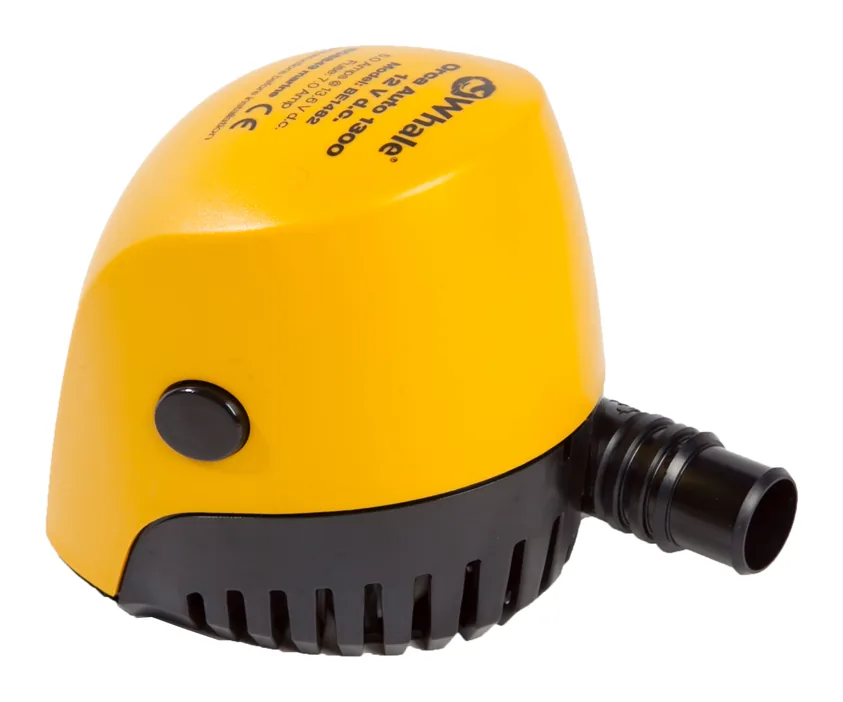
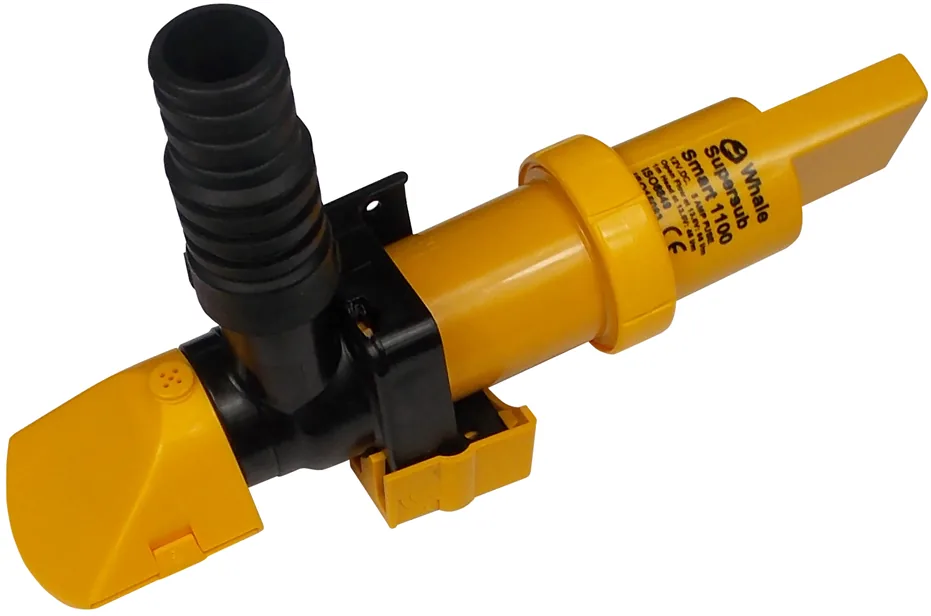
Newer pumps sense water electronically, with no moving parts, and start when the level is high enough. There is no float to jam and installation is simpler. Whale makes automatic bilge pumps of this kind, such as the compact Orca Auto and the slim Supersub Smart, whose long shape also suits narrow bilges.
A backup pump and an alarm
One pump is not enough if it fails or if water comes in faster than it can pump. That is why we recommend a second, larger pump mounted a little higher in the bilge. It only starts when the first cannot keep up, and it sets off an alarm at the helm to warn of a serious problem. Larger boats with several separate compartments usually have a pump in each.
Regular bilge pump checks
- Clean dirt, hair and debris out of the bilge so they cannot block the pump intake.
- Test the pump: lift the float or pour water into the bilge and check that it starts and pumps it out.
- Inspect the hose and the outlet fitting on the hull for cracks or blockages.
- Check the connections and cables, which are exposed to damp and corrosion in the bilge.
- If the pump runs more often than it used to, find out why rather than just pumping the water out.
If the boat sits in a marina for long spells, the battery has to stay charged for the pump to work. Solar panels help with that, as we describe in Solar panels on a boat: how much power you need and where to fit it.
You will find Whale bilge pumps and the rest of the water system on the Water systems page. We inspect the bilge and the existing pumps, propose the right size and layout, then fit the pumps and wire them to an alarm. Write to us or call us.
Frequently asked questions
How big a bilge pump do I need?
It depends on the size of the boat and the bilge. Hose length, outlet height and voltage mean real output is lower than the rated figure, so it pays to choose a larger pump.
Can I replace a float switch with electronic sensing?
Yes. We can fit a pump with built-in water sensing or a separate electronic sensor, chosen to suit your bilge and existing wiring.
Should the bilge pump work with the main switch off?
An automatic bilge pump should always have power, so we wire it straight to the battery on its own fuse. A manual switch at the helm stays as an extra option.