Loads first, then panels
We start with a look at consumption: fridge, autopilot, navigation, lighting, pumps and everything that runs overnight. From that we work out how much energy the panels must deliver on an average day, and how much battery you need for the night.
On a sailing yacht a few hundred watts of panels are sufficient to run the fridge and electronics all day. A boat with more loads, for example an inverter for 230 V, needs more power and a larger battery. Our calculation also allows for the fact that panels on a boat are rarely at the ideal angle to the sun, and that sails or superstructure shade them for part of the day.
Where the panels go
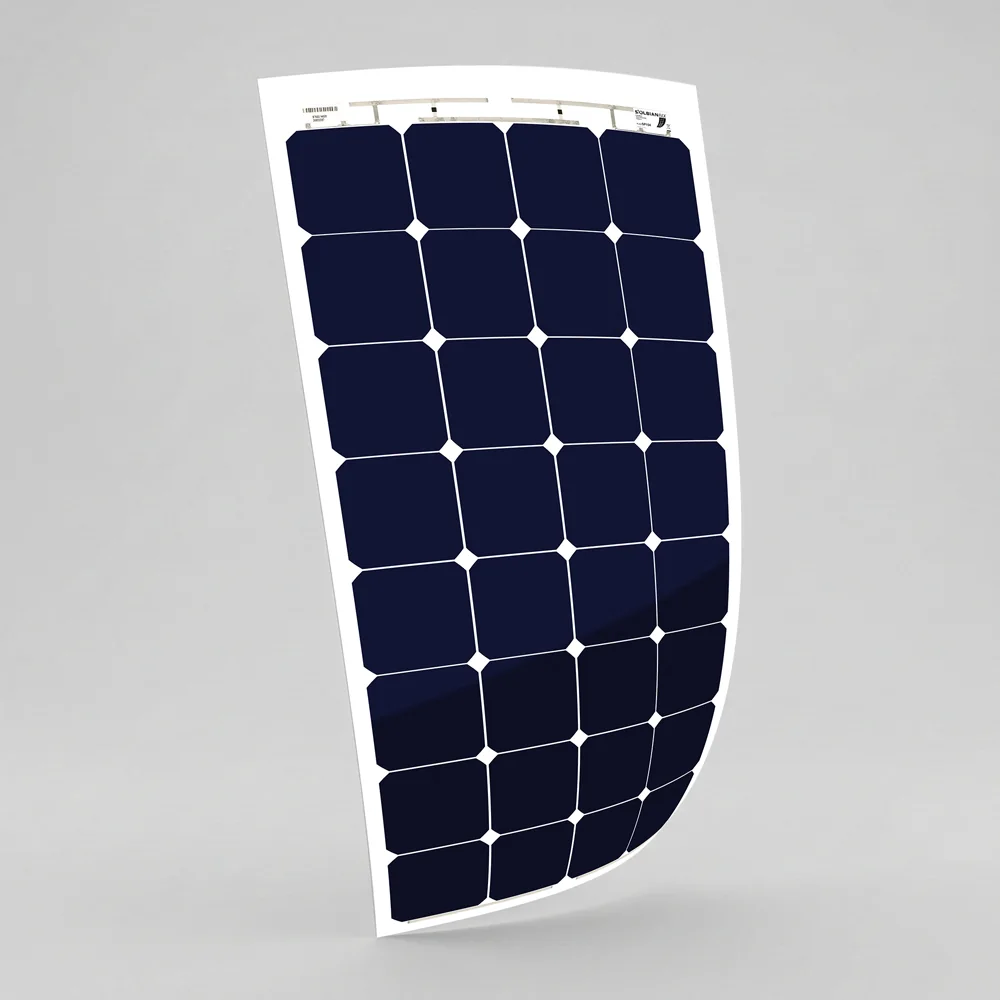
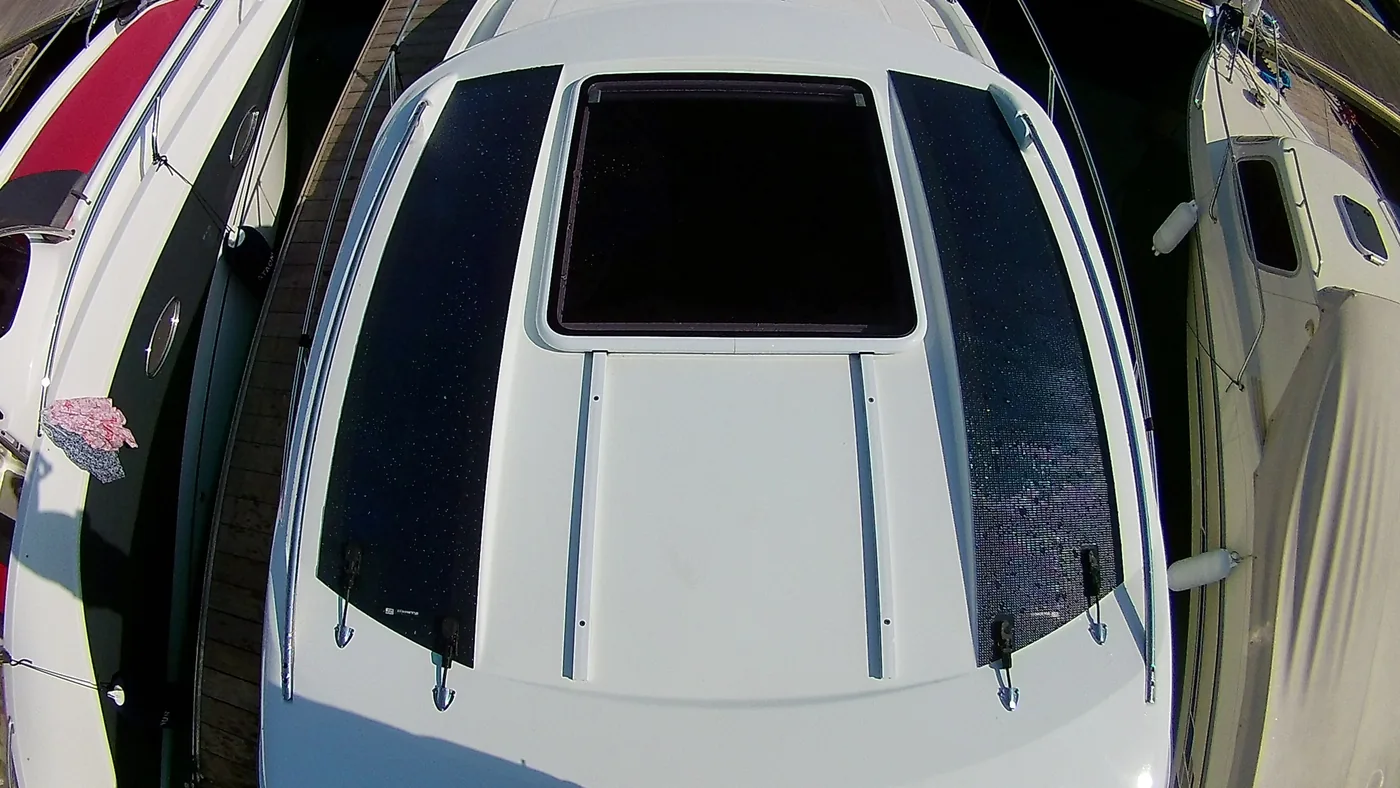
Space on board is limited, which is why thin, flexible panels that follow the curves of the coachroof, bimini or hardtop are increasingly popular. Solbian panels can also be made to measure to use every available bit of surface.
Italy’s Solbian makes thin, light, walk-on panels. The SP series has SunPower cells at 24% efficiency for the most power from limited space, the SR series is a robust version for everyday use on deck and bimini, and made-to-measure panels are shaped around hatches, mast and fittings.
How the panels are fitted
On a rigid surface flexible panels are usually bonded in place; on a bimini we fix them so they can be removed when needed. Cables pass through the deck via watertight glands and are protected from chafe, and the connections go where seawater cannot reach them.
Shade and the regulator
Shade from the mast, boom or antennas can sharply cut the output of panels wired together. So we split the panels into groups on separate MPPT regulators, for example from Mastervolt, so shade on one panel does not reduce the output of the rest.
An MPPT regulator keeps tracking the point at which the panel gives its maximum power and matches the panel voltage to the battery, so you get more energy from the same panels than with a simple regulator. Mastervolt makes it as the MPPT Solar ChargeMaster.
Batteries
Lithium-ion batteries accept charge faster and can be discharged more deeply, so you get more out of the same panels. Safety matters when fitting them; read more in Lithium-ion batteries: a safety relay and a class T fuse.
A practical example is described in the story 1,400 W of solar on a sailing yacht.
Frequently asked questions
How many solar panels do I need?
It depends on your consumption and the space available. After reviewing your loads we work out the panel power and battery capacity for your boat.
Are flexible panels as efficient as rigid ones?
Good flexible panels with high-efficiency cells give very good output for their area, and their advantage is that they fit where rigid panels cannot.
Do I need new batteries?
Not necessarily. We check your existing batteries and charging and tell you whether a change, for example to lithium-ion, makes sense.