Gas: little electricity, but more rules
A gas stove needs very little electricity, which is why it was long the norm on smaller boats and sailing yachts. Bottled gas is heavier than air, so any leak collects in the bilge, which is a serious hazard. A gas installation therefore needs a sealed bottle locker draining overboard, a shut-off valve, a gas detector and regular checks.
An open flame in the cabin uses oxygen and adds moisture, so good ventilation is essential. A marine gas stove should also have flame-failure protection that shuts off the gas if the flame goes out, for instance in a draught.
Ceramic glass and induction
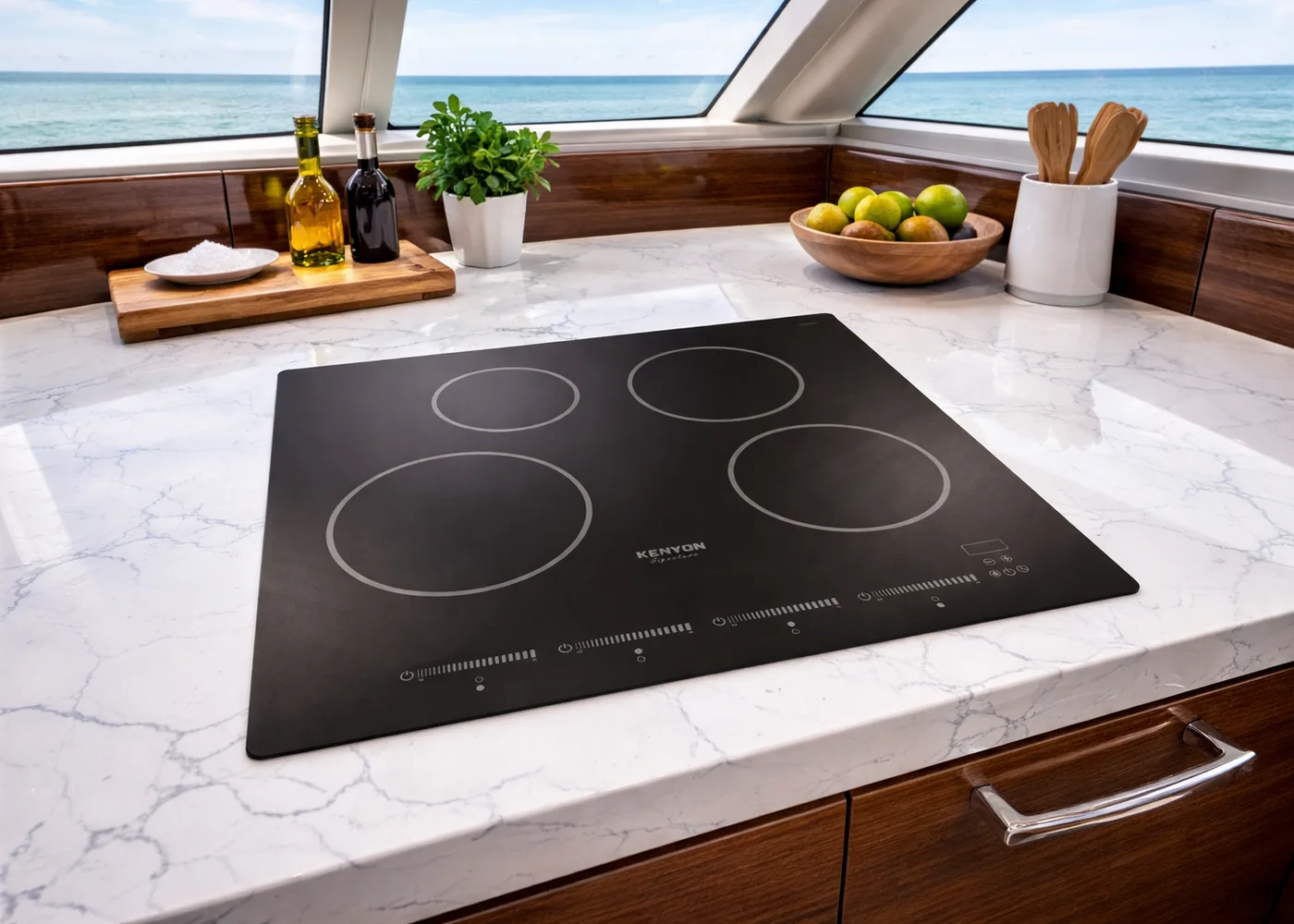
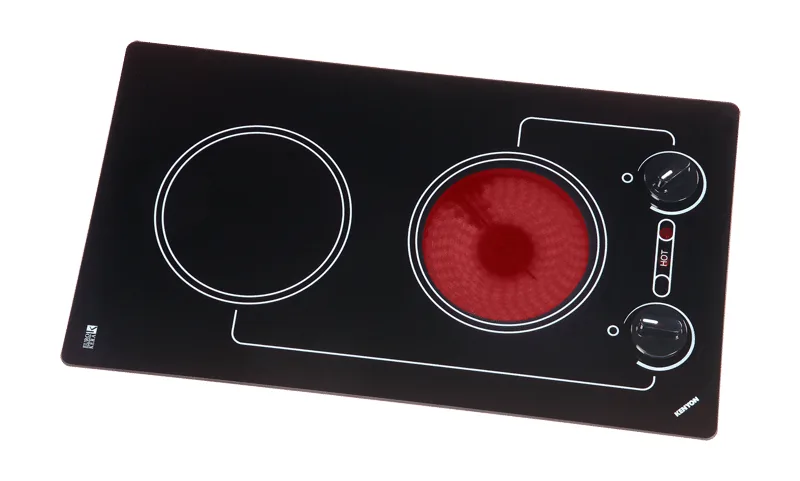
A ceramic glass cooktop heats with an element under the glass, which passes the heat to the pan. It works with any flat-bottomed pan, and the glass stays hot for a while after cooking. Smooth glass with no gaps wipes clean quickly, which matters in a small galley.
An induction cooktop on a boat uses a magnetic field to heat the pan itself, so it cooks quickly and makes better use of the energy, while the glass only warms from the pan. Lift the pan off and the zone stops heating, which is welcome in a seaway. It needs magnetic cookware, which you can check by holding a magnet to the bottom of the pan.
How much power a cooktop needs
Electric cooking zones are among the biggest loads on a boat. In the marina they run from shore power; at anchor from a generator or a large enough battery bank with an inverter, which turns the batteries’ DC into AC. How much you can cook without a generator depends on the batteries, the inverter and your charging.
So we always choose the cooktop together with the power system. Batteries, inverters and chargers are on the Power page, and safe lithium installation is covered in Lithium-ion batteries: a safety relay and a class T fuse.
How to choose
- the size of the worktop cut-out and the number of zones you need
- a control lock, so the cooktop cannot be switched on by accident under way
- pan holders or a fiddle rail to keep pans in place in a seaway
- ventilation or a hood over the worktop for steam and smells
Kenyon has been making cooktops and electric grills since 1931, including for boats. We look at your galley and electrical system, propose a cooktop and install it. If you also cook on deck, read Electric grill for a boat: safe grilling on deck. Write to us or call us.
Frequently asked questions
Can I replace a gas stove with an induction cooktop?
Often, yes, but first we check whether the electrical system can carry the extra load. Sometimes batteries, an inverter or a generator need to be added.
Will induction work with my pans?
It works with any pan whose base attracts a magnet. Aluminium and copper pans without a magnetic base will not work.
Can I cook on induction at anchor?
Yes, if you have a large enough battery bank with an inverter, or a generator. We work out how much based on your cooking and other loads.