How a boat pressure pump works
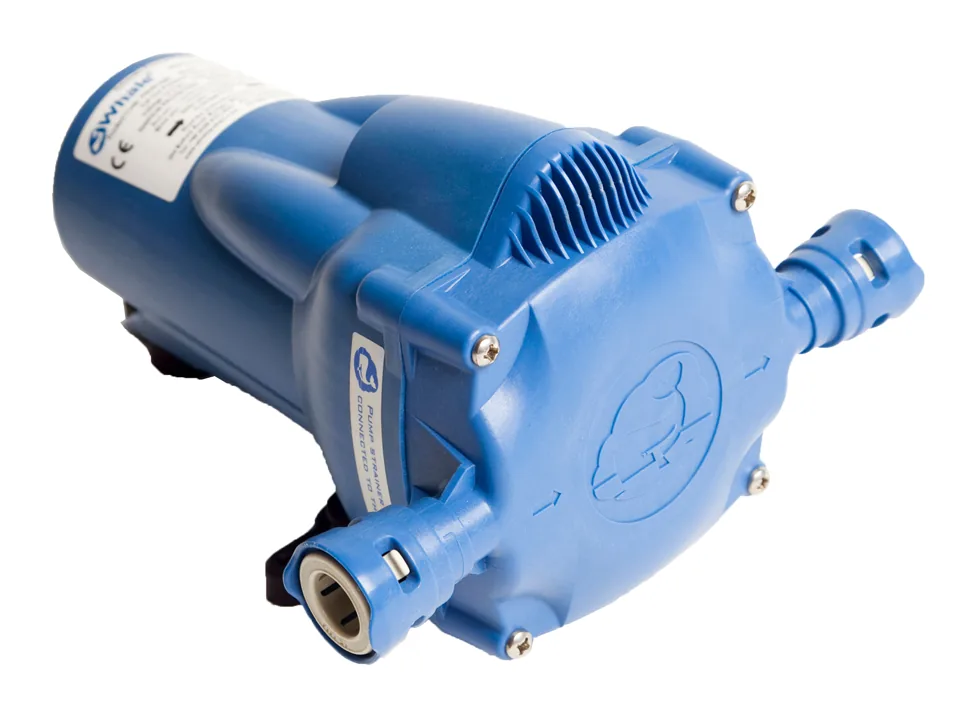
Water from the tank runs through a coarse strainer to the pressure pump. The pump has a built-in pressure switch: open a tap and the pressure in the pipes drops, so the pump starts; close it and the pressure builds until the pump stops. You get water in the galley, the heads and on deck without ever switching the pump on by hand.
The accumulator is a small vessel with an air cushion, fitted after the pump. It acts as a buffer: it smooths the flow, stops the jet from pulsing and keeps the pump from starting every time someone opens a tap for a second. The pump runs more quietly, less often and lasts longer.
Filters, water heater and deck shower
- A coarse strainer before the pump catches particles from the tank and protects the pump. Clean it regularly: a blocked strainer is a common cause of poor flow.
- A drinking water filter, usually activated carbon, improves the taste and smell of water from the tank.
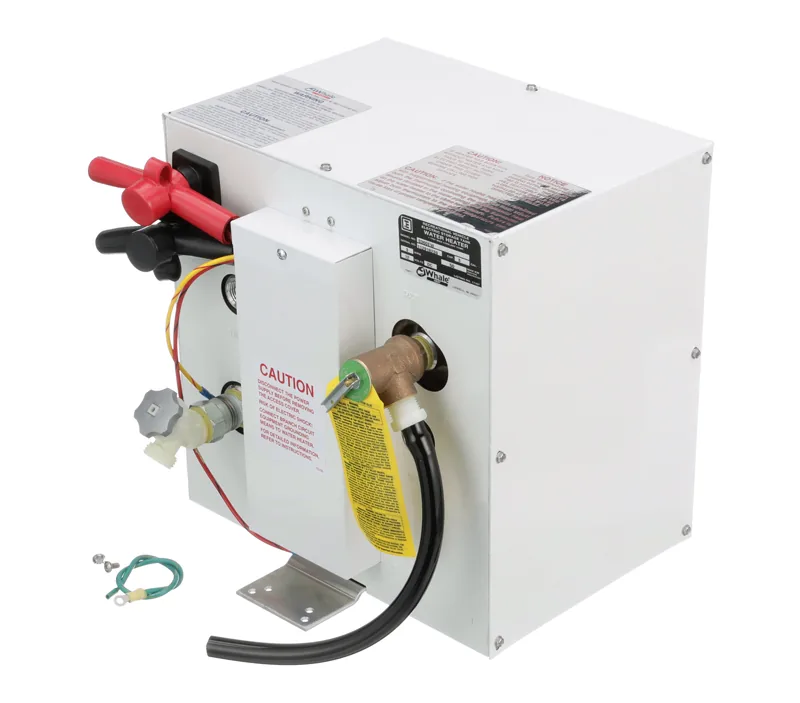
- A marine water heater usually heats water in two ways: with an electric element when you are on shore power or running a generator, and with heat from the engine coolant under way.
- A deck shower, at the stern or on the swim platform, is handy for rinsing off salt after a swim. Whale makes the Twist hand shower on a flexible hose that stows away after use.
Signs that something is wrong
- The pump starts on its own now and then with every tap closed: most often a small leak in a pipe, a joint or the water heater, sometimes a failing check valve inside the pump.
- The pump keeps cutting in and out while a tap is running: the accumulator has often lost its air charge, or there is none.
- Low pressure or a spluttering jet: a blocked strainer, air in the system or a nearly empty tank.
- The pump runs but no water comes: the tank is empty or the pump has drawn in air.
- A loud hum through the whole boat: check the pump mounts and the flexible hoses that stop vibration reaching the hull.
At Whale, pressure pumps, water heaters and showers are designed as parts of one system that fit together. You can keep an eye on the tank level with a Simarine sender and display, as we describe in NMEA 2000: one network for all the data on board. If you would rather make your own water, read Watermakers: how fresh water changes life on board.
We inspect your water system, find the cause of the problem and propose a repair or a replacement. We fit the new pump, accumulator or water heater and test the system. You will find the full range on the Water systems page; to arrange a visit, write to us or call.
Frequently asked questions
Why does my water pump start on its own?
Usually because a small leak lets the pressure drop. Check the joints, taps and water heater; if there is no leak, the valve inside the pump may be at fault.
Do I need an accumulator?
It is not essential, but it is worth having. The pump starts less often, the flow is smoother and the system is quieter.
How do I winterise the water system?
Drain the tank, pipes, water heater and shower and leave the taps open, so no water is left to freeze and damage the pump or heater. We can help with winterising.