How a NMEA 2000 network is built
The network has a main cable (the backbone) with a terminator at each end, and devices connect to it with short drop cables. It runs on 12 V. Because it is a standard, devices from different makers share data, for example the chartplotter, autopilot, gauges and sensors.
NMEA 2000 is based on the CAN bus, also used in cars and industry, and carries data at 250 kilobits per second. All devices share the same cable, so there is no need to run a separate link between every pair of devices.
The rules of a good installation
Drop cables should be short; the standard allows six metres at most. We connect the power roughly in the middle of the backbone to keep the voltage drop at both ends small, and on larger networks we calculate how much current all the devices draw together. Connectors must be waterproof and properly tightened, because a poor contact is a common cause of trouble. On boats with a 24 V system we power the network through a 12 V converter.
Each device claims its own address on the network, so you can later add a device or replace an old one without changing the wiring.
What you can monitor
- battery state, voltage and charge and discharge current
- fuel, water and waste levels in the tanks
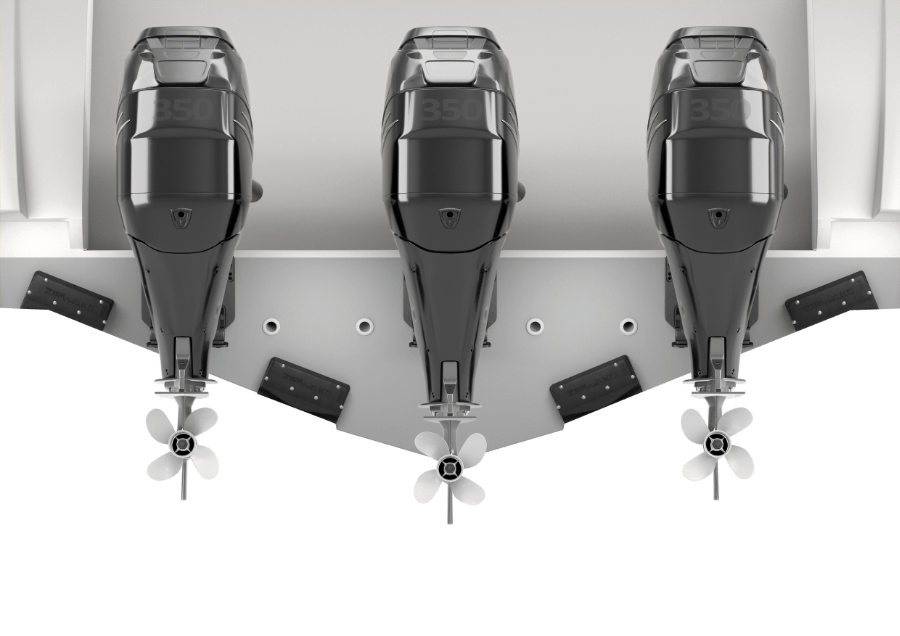
- engine data: RPM, temperature, oil pressure
- position, speed and heading from GPS, plus wind and depth
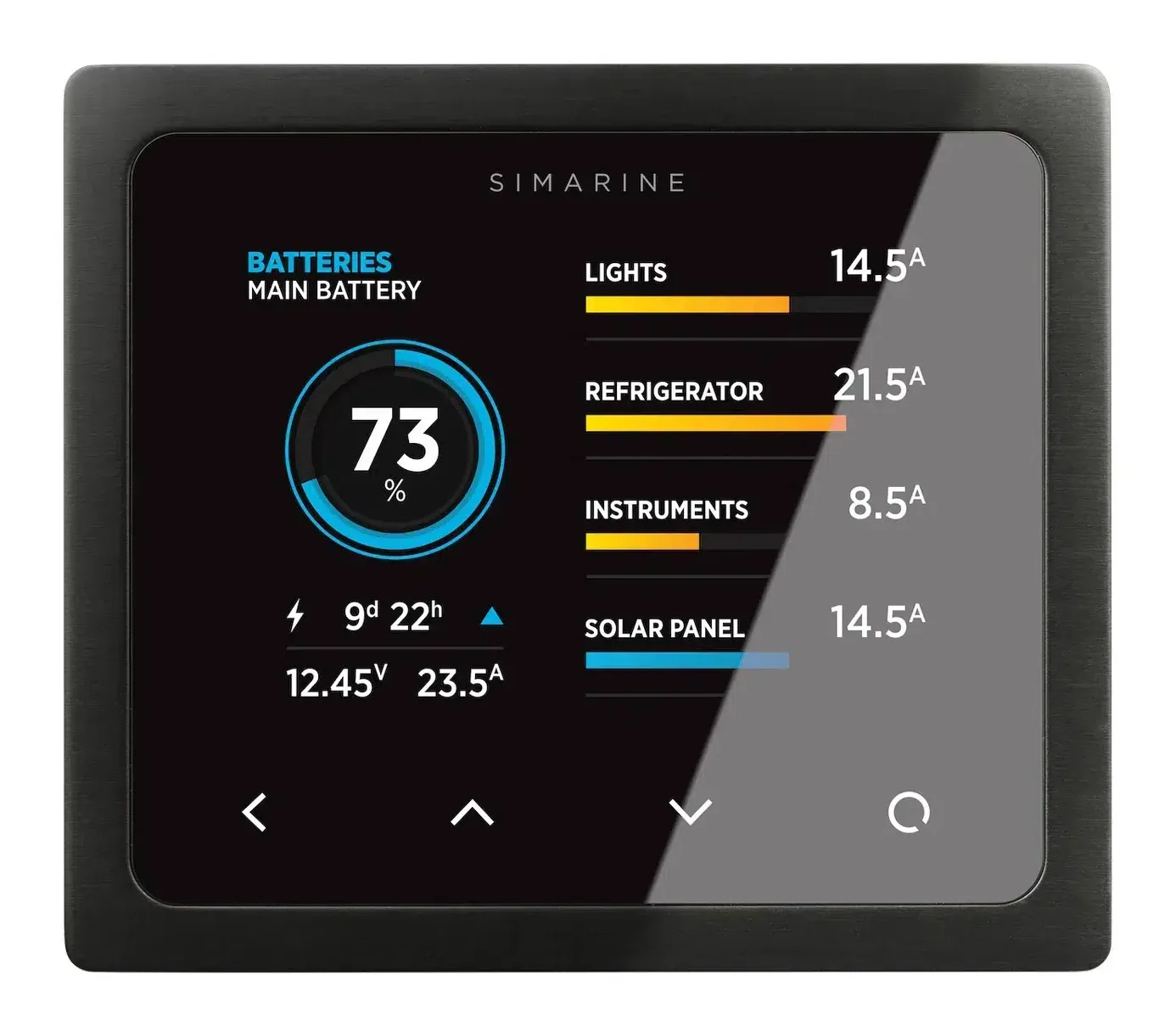
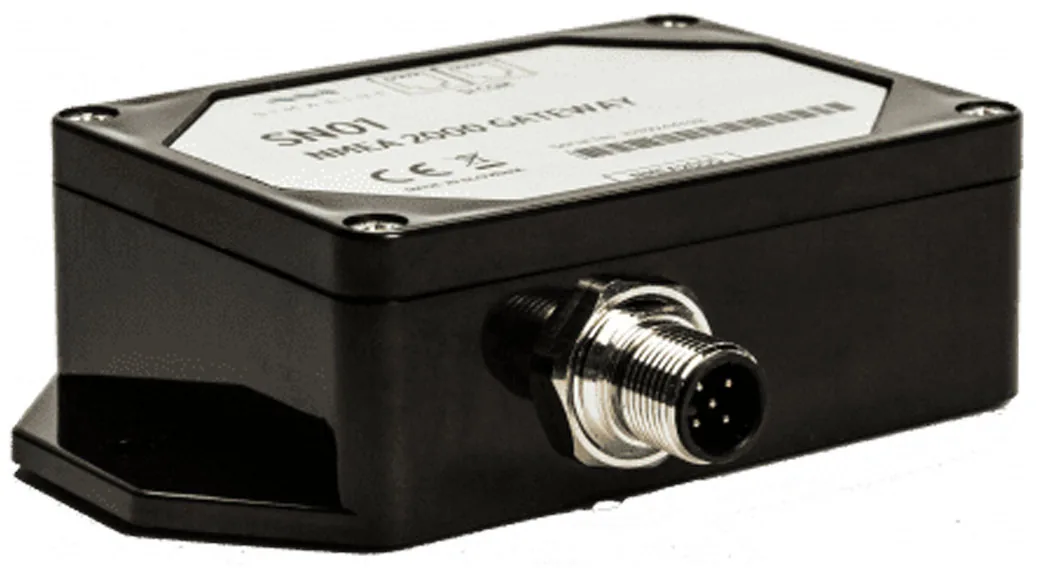
The Simarine system measures batteries and tanks and, through its NMEA2000 Gateway, also sends that data to the chartplotter. How state-of-charge measurement works is explained in Battery monitoring on a boat: state of charge and tanks. On larger boats we extend the network with many sensors; the Selene 66 trawler has more than thirty, as you can read in A full refit in Punat. A network pays off on a smaller boat too: on an Avon 400 tender it shows the engine data on an instrument.
Older devices with NMEA 0183 and analogue senders, such as tank level sensors, are connected through suitable converters. We plan, install and set up the network so it is clear and reliable. More about boat monitoring is on the Monitoring and control page.
Frequently asked questions
Can I add a new device to an existing network?
Usually, yes, if there is room for another drop on the backbone and the network can supply the extra power. We check this before installing.
Does NMEA 2000 work with devices from different makers?
Yes, that is the point of the standard. For some data it is worth checking which message types each device supports.
What is the difference between NMEA 0183 and NMEA 2000?
NMEA 0183 is the older standard with point-to-point links between devices; NMEA 2000 is a network in which all connected devices share data.