A standard range for electric propulsion
American manufacturer Glendinning introduced its controls for electric propulsion in 2021; according to chief executive John Glendinning, the fast-growing demand for electric drives prompted the move. At METSTRADE in November 2024 it offered them as a standard range, which the company says makes them easier to obtain and quicker to deliver. Custom versions remain available to order.
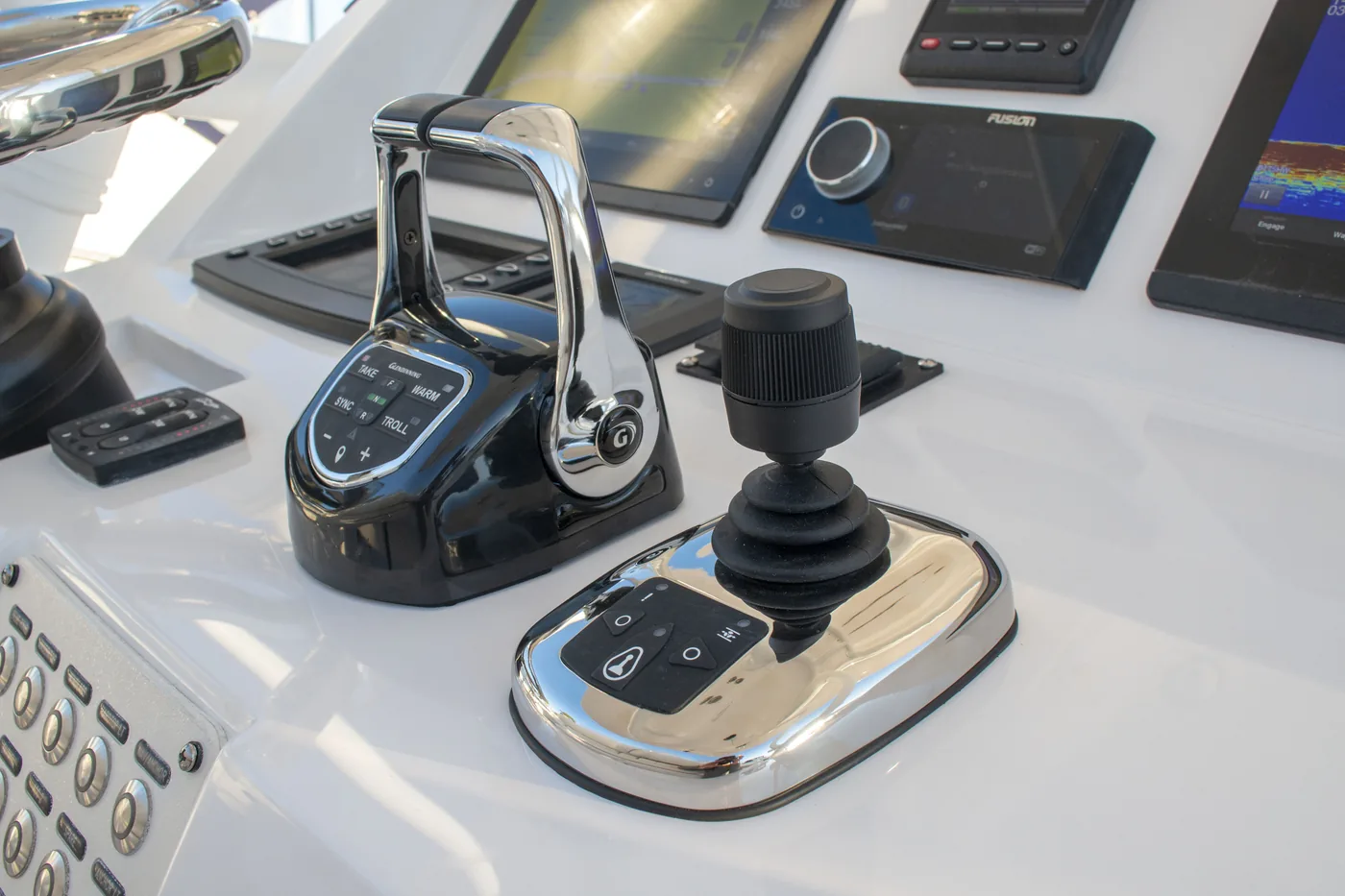
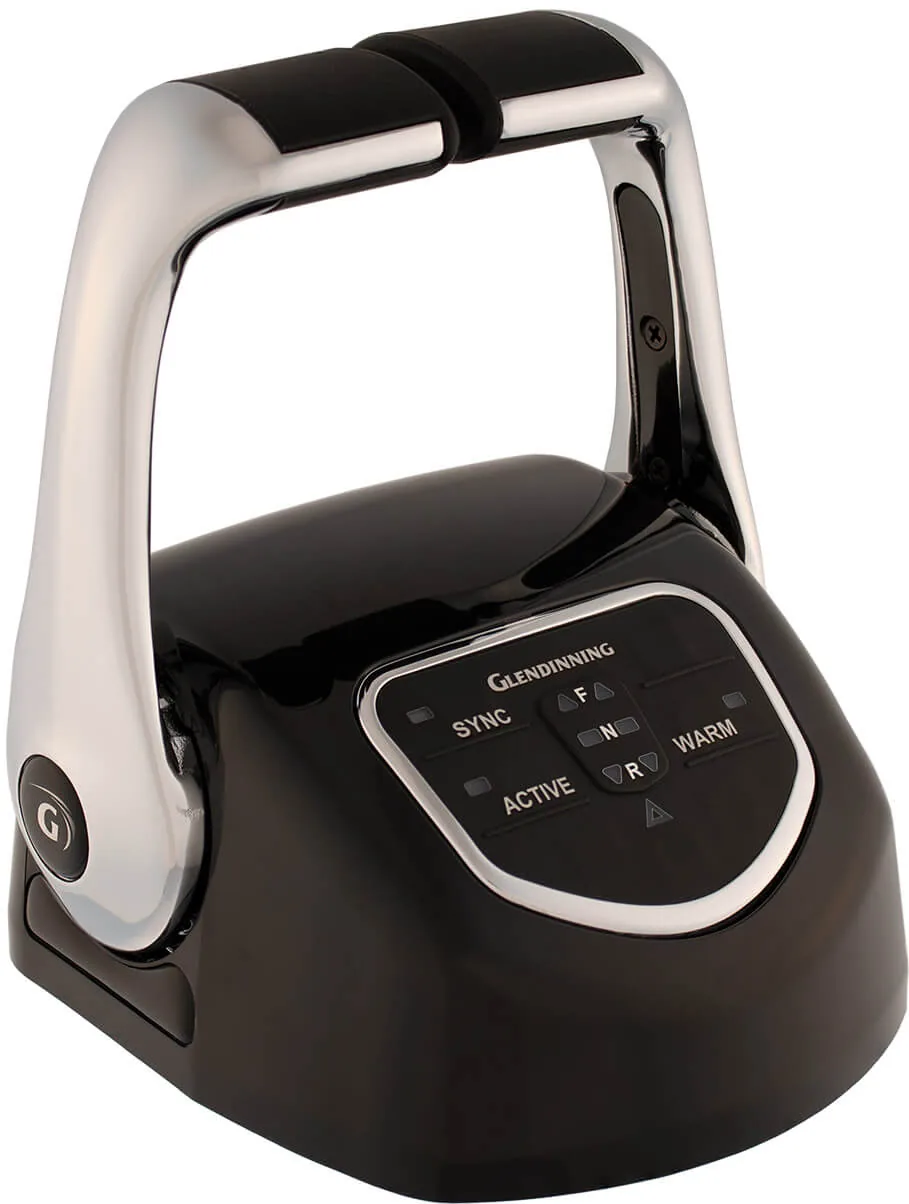
The range covers the SM Control side-mount unit and the Genesys, CH2001 ProGrade and RSCH top-mount controls. The ProGrade has the classic look, with a polished stainless steel body and handles, while the Genesys has a more contemporary design.
How the control talks to an electric motor
Handle position is read by dual-channel, non-contact Hall effect sensors. The control sends its commands to the motor controller in one of two ways. The analogue output gives 0.5 to 4.5 V, linear from full astern to full ahead, and is meant for simple single-station systems.
The J1939 CAN output runs on 10 to 36 V and carries shift, throttle and trim commands as standard J1939 messages. Only this output offers multiple stations with station transfer, drive synchronisation and LED indicators.
Control options and settings
- One or two handles, for single or twin motors; on a single motor the handle can sit to port or starboard.
- A choice of detents: none, neutral only, or neutral plus forward and reverse idle, with 15 or 22.5° between neutral and idle.
- Handle travel of 90 or 150°, adjustable friction and a programmable throttle curve.
- An in-handle trim switch for outboards and sterndrives; the SM Control side mount adds a kill switch and a mechanical neutral interlock.
Built for an open helm
The Genesys, ProGrade and RSCH are rated IP68, which the manufacturer specifies as immersion to 1 m with the ports plugged. It quotes 1,000 hours of UV resistance, and 300 hours of ASTM B117 salt spray without red rust for the Genesys and ProGrade. The controls carry CE and UKCA marking and, according to the manufacturer, are designed to the intent of electronic control standards including ISO 25197 and ABYC P-24.
We fit Glendinning electronic controls to boats with combustion engines, and Electronic engine controls for your sailing yacht too describes how this works on a sailing yacht. On a boat with electric propulsion we first check which signal the motor controller needs, then propose a control, fit it and set it up. You will find all the equipment on the Monitoring and control page. Write to us or call.
Frequently asked questions
Do Glendinning controls work with any electric motor?
The control must give the motor controller the signal it expects: an analogue voltage or J1939 CAN messages. The manufacturer does not publish a list of compatible motors, so we check compatibility boat by boat.
Can I control electric propulsion from two helm stations?
Yes, with the J1939 CAN version, which supports multiple stations and transfer between them. The analogue version is for a single station.
What does IP68 mean for a control?
The control is protected against dust and immersion. Glendinning specifies it for the Genesys, ProGrade and RSCH at a depth of 1 m with the ports plugged.