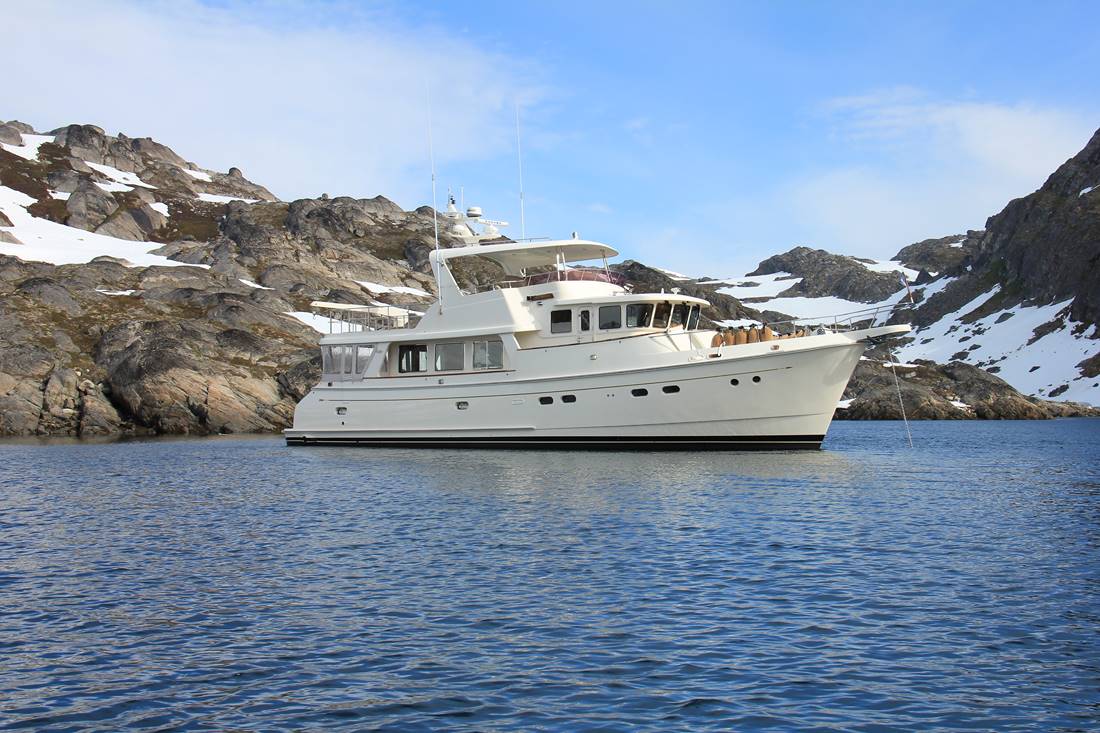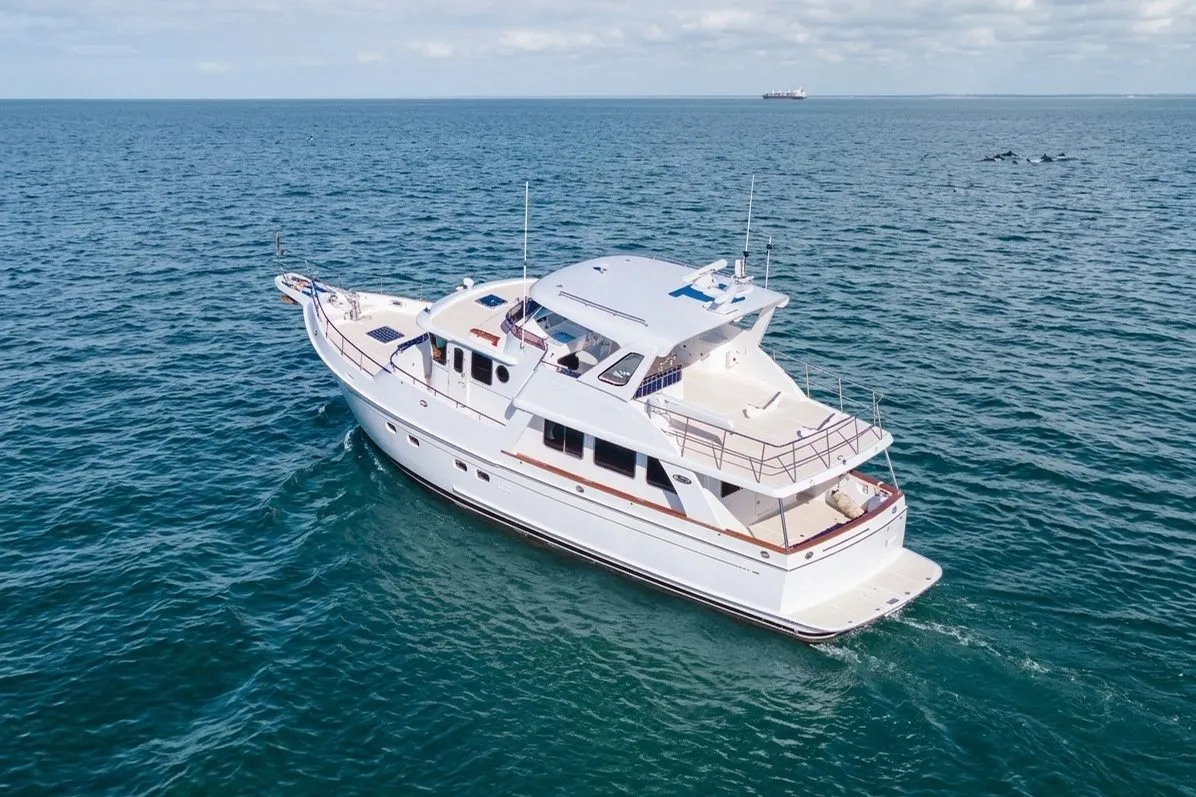
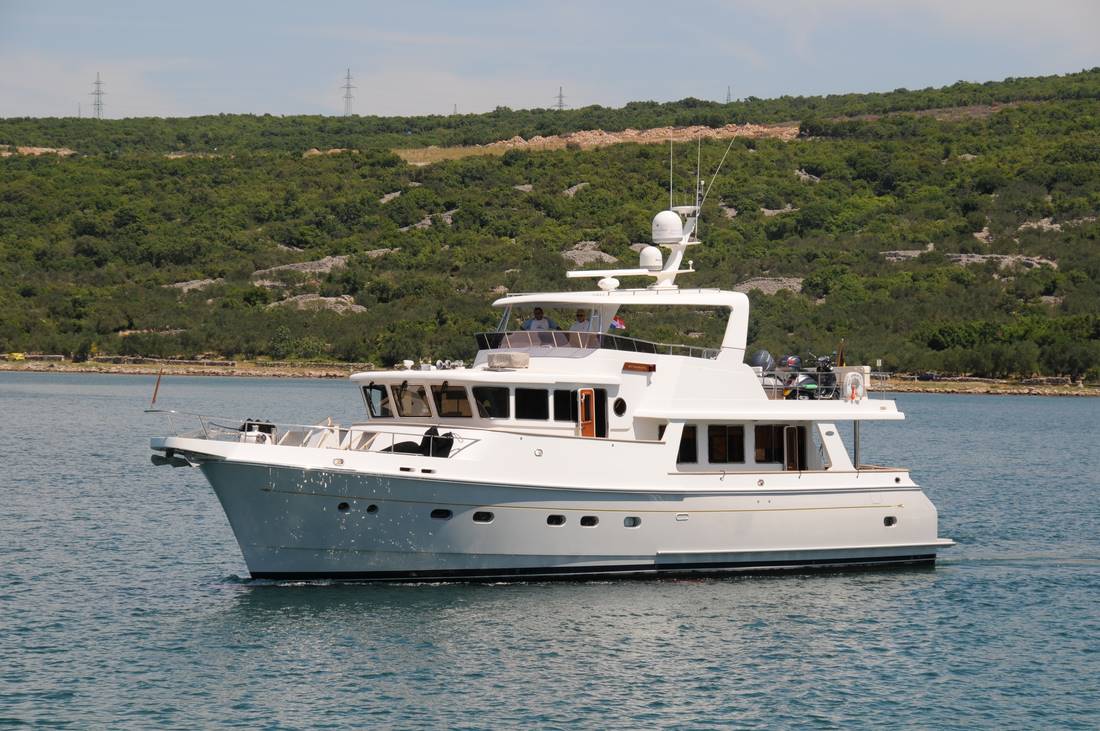
A Maretron NMEA 2000 network with more than thirty sensors, thermal cameras for night passages and Simrad navigation with twin radars.
What we did
- Arrived from Spain to Punat for a full refit
- Polishing, and teak sanding with repairs
- Removal of the old Raymarine navigation
- Maretron NMEA 2000 network with more than thirty sensors monitoring the whole vessel
- Thermal cameras for night passages
- Simrad navigation with twin radars
What a full refit of a trawler involves
In a full refit the work on deck and the work on the electronics run side by side, so we plan them together. Teak decking is constantly exposed to sun, salt and foot traffic. Sanding removes the grey, worn surface, damaged areas are repaired, and the deck becomes even and pleasant to walk on again.
Removing old electronics is often more involved than it looks. Cables run through the whole boat, so the old system has to be taken out carefully before the new one can go in.
A NMEA 2000 network with more than thirty sensors
The core of the refit is a Maretron NMEA 2000 network that monitors the whole vessel with more than thirty sensors. A boat of this size has many systems that the crew would otherwise check by hand or not see at all. The network gathers their data in one place, so the crew can follow the state of the boat on a screen. Which sensors we fit depends on the boat and on what the owner wants to monitor.
What a sensor network on a trawler can monitor
- fuel and water levels in the tanks
- battery state, charging and consumption
- water in the bilges and bilge pump activity
- engine-room temperatures and engine data
Thermal cameras for night passages
A thermal camera needs no light, because it detects heat. At night it shows unlit boats, buoys and a person in the water that the naked eye would miss. Radar reliably picks up larger targets but often misses small objects just above the surface, so the camera and the radar complement each other.
Simrad navigation with twin radars
We built the new navigation on a Simrad system with twin radars. The second radar is a backup if the first fails, and it also lets the crew set one radar for the immediate surroundings, for example when entering harbour, and the other for longer range.
We explain how the network works in NMEA 2000: one network for all the data on board. You will find monitoring equipment on the Monitoring and control page and navigation on the Navigation and communication page. If you are planning a refit, tell us about your boat and what you have in mind; we prepare a plan and carry it out.
Frequently asked questions
Can a NMEA 2000 network be fitted to an older boat?
Yes. The network can be added later, during a refit or as a job of its own. Older devices and analogue sensors are connected through suitable converters.
Why a thermal camera if the boat has radar?
Radar and camera complement each other. Radar detects targets at longer range, while a thermal camera also shows small objects and a person in the water at night.
Can old electronics be replaced with another maker’s equipment?
Yes. On this Selene we removed the old Raymarine system and fitted Simrad navigation. Before a change we check the wiring, the space for displays and the devices you want to keep.