Why height matters so much
VHF radio waves travel roughly in a straight line, much like light. Once your antenna and the other station’s antenna can no longer “see” each other over the curve of the Earth, there is no contact, however powerful the radio. That is why antenna height has the biggest effect on range: the higher it is, the further the horizon the signal can reach.
It is also why you hear coast stations and ships, with their antennas up high, from further away than another small boat. A handheld held in your hand is close to the water, so it has the shortest range. Raising an antenna a few metres often does more for range than a more powerful radio.
Where to mount a VHF antenna on a boat
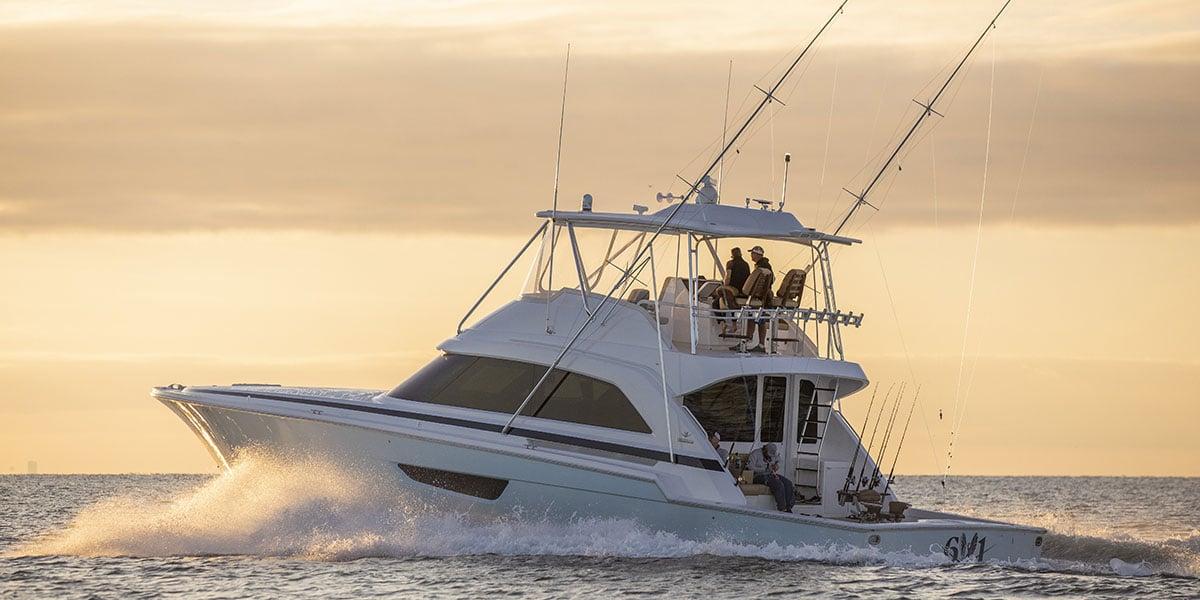
On a sailing yacht the best place is the masthead. On a motor boat we mount the antenna at the highest point of the superstructure, on the radar arch or tower, with a bracket that holds it upright. We keep it clear of other antennas, for example for AIS, radar and television, so they do not interfere with one another.
Some sailing yacht owners also keep a spare antenna at the stern for use if the mast or the cable inside it is damaged.
Cable and connectors
Between the antenna and the radio, some of the signal is lost in the cable. The longer and thinner the cable, the greater the loss, so on long runs such as up a yacht’s mast we use good-quality low-loss coaxial cable. We avoid sharp bends and crushing, which spoil its performance.
The weakest points are the connectors. If moisture gets into the connector at the antenna or at the deck gland, it slowly corrodes the contacts and the range drops without anyone noticing. So we crimp or solder connectors properly and seal them against water, and where the cable passes through the deck we use a sealed gland so water cannot find its way inside.
Testing and inspection
- After installation we measure the standing wave ratio (SWR), which shows whether antenna, cable and connectors work together as they should.
- We test the link with the marina or another boat on a working channel, not on channel 16.
- At the annual check we inspect the connectors, bracket and cable, especially after winter or work on the mast.
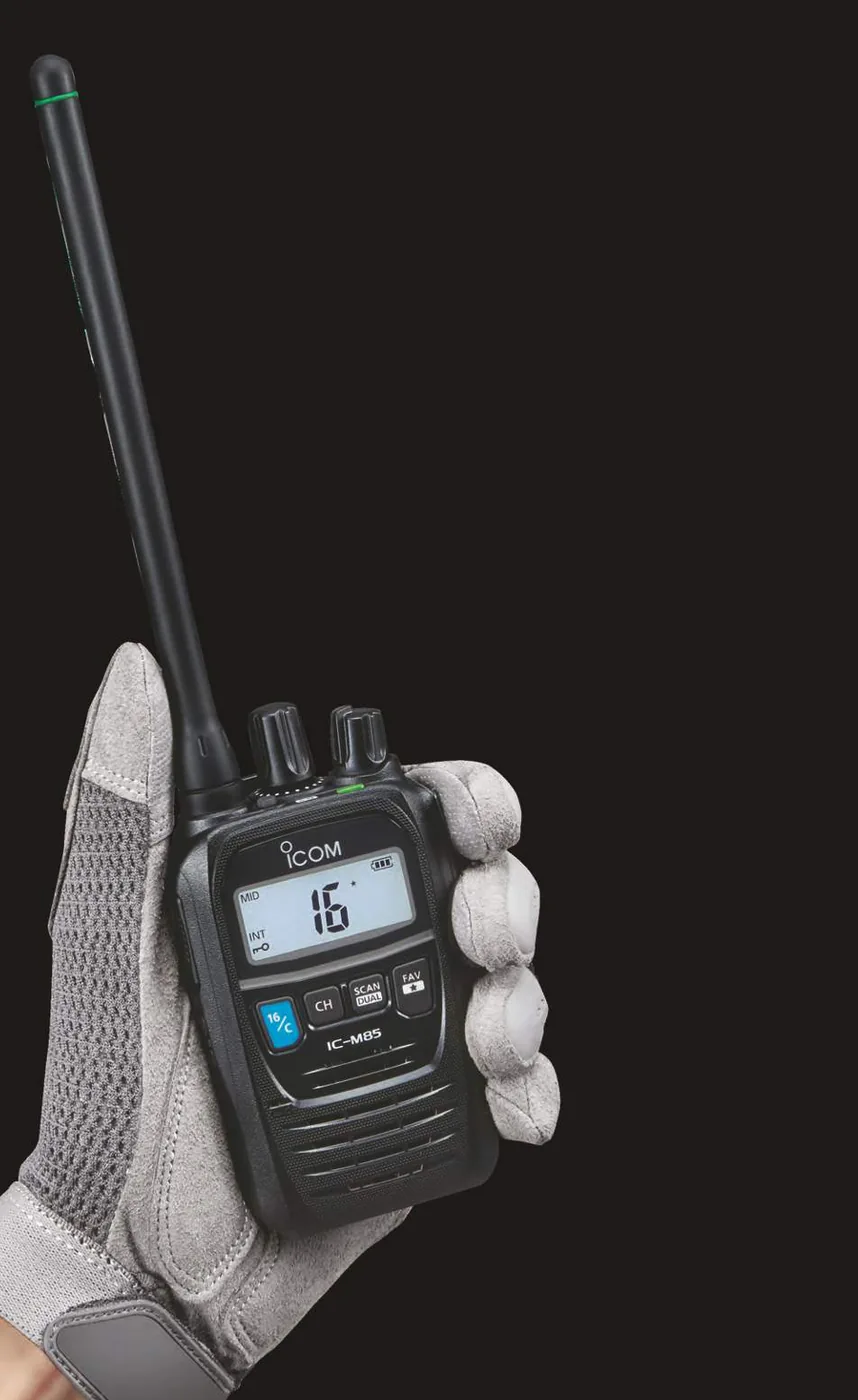
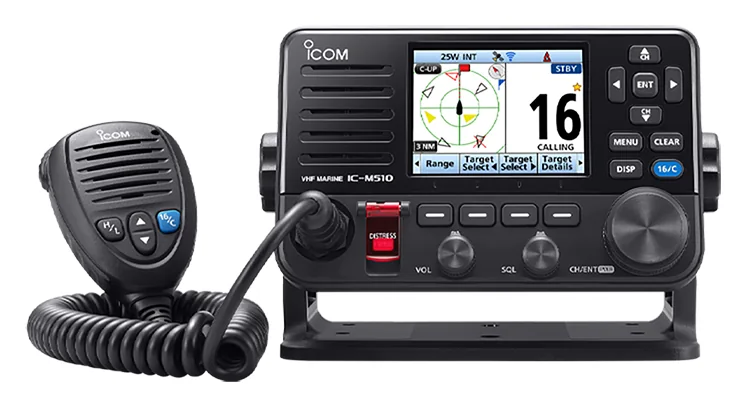
We always choose the antenna together with the radio; read about choosing between a fixed and a handheld set in VHF radio on a boat. Icom radios are on the Navigation and communication page. We look at where your antenna sits and how the cable runs, propose improvements, carry them out and check the range.
Frequently asked questions
How far does a VHF radio reach?
It depends mainly on the height of both antennas, then on the cable and the radio’s power. With a well-fitted antenna on the mast or arch, range is far greater than with a handheld on deck.
When should the antenna be replaced?
When range drops noticeably, when the antenna is physically damaged, or when an inspection finds corroded connectors or damaged cable. Often replacing the cable and connectors is enough.
Can I fit the antenna myself?
You can, but most problems arise at the connectors and where the cable passes through the deck. If you prefer, we do the installation and finish by measuring that the system works properly.