Charger, inverter and combi unit
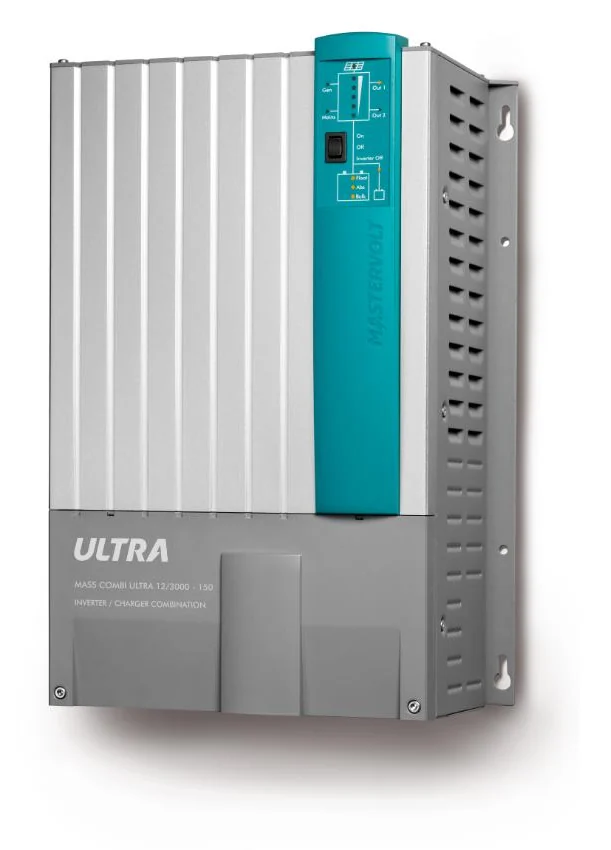
A charger takes 230 V shore power in the marina, or power from a generator, and charges the batteries on board. An inverter works the other way round: it turns 12 or 24 V from the batteries into 230 V, so the coffee machine, hairdryer or laptop charger work at anchor. A combi unit combines both in a single device, with a built-in transfer switch.
When you plug into shore power, the combi passes 230 V through to your sockets and charges the batteries at the same time. When you unplug or the generator stops, it switches over to the inverter. In practice, the sockets on board work the same in the marina as at anchor.
In the marina and at anchor
In the marina, shore power is the main source and the charger has time to charge the batteries fully. At anchor the roles change: energy comes from the alternator under way, from solar panels or a generator, and the loads draw it from the batteries. So we look at both: how much time you spend plugged in and how many nights you spend out.
The inverter should give a pure sine wave output, the same as mains power. Sensitive electronics, chargers and motors then run as they should, without humming or running hot.
A boat battery charger has to know your batteries
A modern charger does not charge at one steady voltage but in stages: first at full current, then at a controlled voltage as the battery nears full, and finally at a lower float voltage or not at all. That sequence is called the charging profile.
Flooded lead-acid, gel and AGM batteries each need slightly different voltages, and a temperature sensor on the battery helps them too. Lithium-ion batteries accept high current almost to the end, but they do not need a constant float charge and they call for precisely set voltages. The wrong profile shortens battery life or never fills the battery completely, which is why it is the first thing we check whenever batteries are replaced.
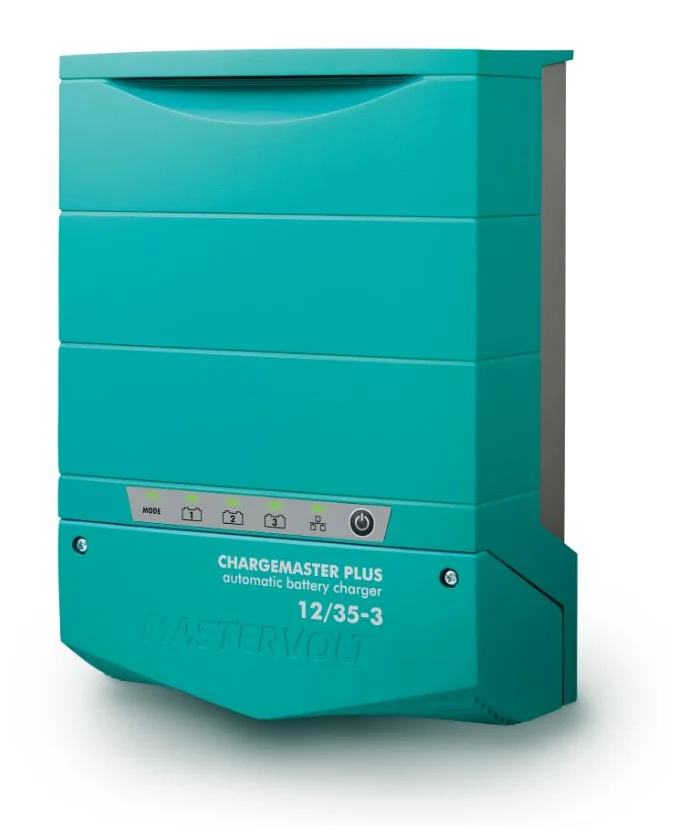
What we take into account
- The type and capacity of your batteries and how many banks you have, for example house, engine start and thruster batteries.
- The 230 V loads you want to run without shore power, and how many run at once.
- The shore supply in the marinas you visit, and whether you have a generator.
- Space for installation and ventilation, since chargers and inverters give off heat while working.
Mastervolt makes chargers, inverters, combi units and lithium-ion batteries designed to work together. You will find them all on the Power page. We look at your batteries, loads and existing installation, propose a solution, fit it and set the charging profile. If you are thinking of switching to lithium, read Lithium-ion batteries: a safety relay and a class T fuse, and for power at anchor see Solar panels on a boat.
Frequently asked questions
Can I use my existing charger with lithium-ion batteries?
Sometimes, if it has an adjustable lithium profile. Older chargers often do not. We check your charger and tell you whether it can be set up or is better replaced.
A combi or a separate charger and inverter?
A combi saves space and switches automatically between shore power and the batteries. Separate units make sense when you are adding to an existing system or need very different charger and inverter sizes.
Will an inverter drain my batteries?
An inverter draws its energy from the batteries, so it matters how many 230 V loads you use and how you charge at anchor. Once we have worked out your consumption, we propose an inverter and batteries that match.